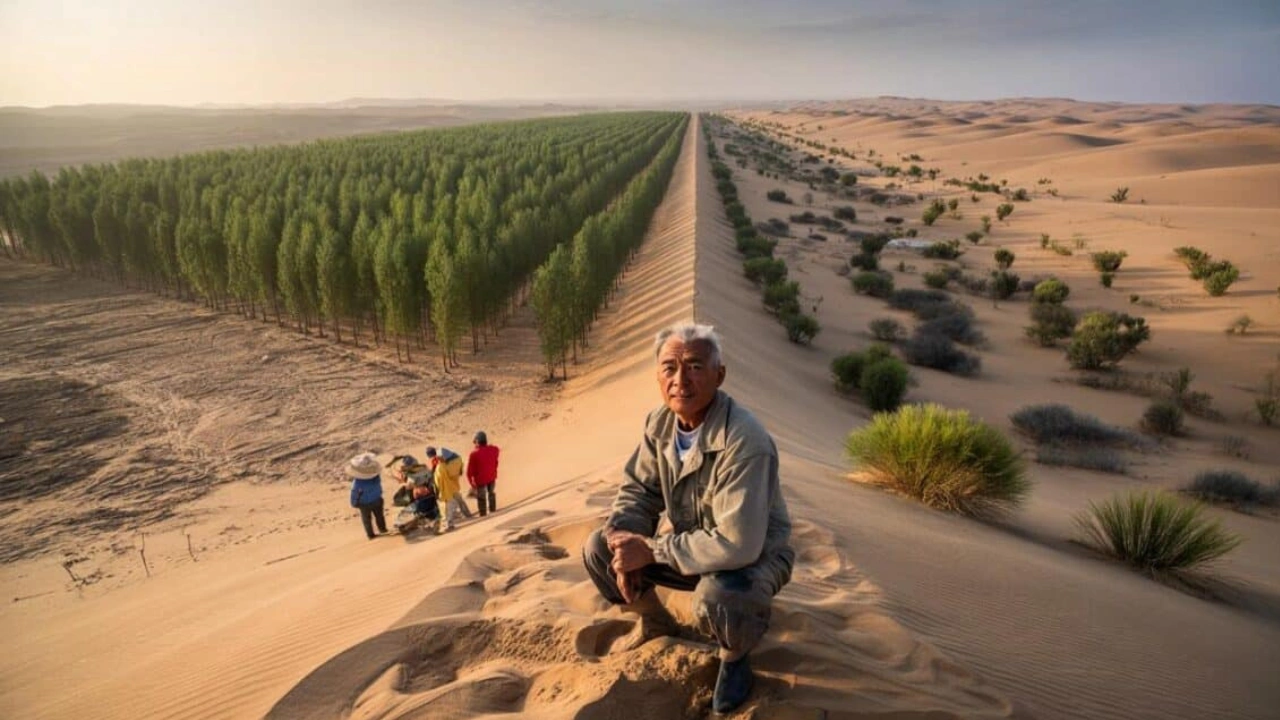
The China Great Green Wall is one of the boldest environmental projects ever attempted. Imagine trying to stop a desert by planting tens of billions of trees. That is exactly what China is doing to push back the Gobi Desert. This effort has transformed large parts of the country’s north, creating a living line of defense made of forests where once there was only dust and wind.
In this blog post, we dive into what the China Great Green Wall really is, how it is changing the landscape, and what makes it one of the world’s largest eco-restoration attempts. From the early planting days in the 1980s to the evolving strategies of today, this story is as much about human effort as it is about environmental science. Whether you are curious about reforestation, climate adaptation, or just want to know if planting trees can really stop a desert, keep reading.
China Great Green Wall: How Trees Are Slowing the Sand
The China Great Green Wall stretches across the northern part of the country, acting as a massive natural barrier against desertification. Its main purpose is to slow the advance of the Gobi Desert, which threatens farmland, villages, and cities with dust storms and land loss. Since the late 1970s, China has been planting trees, shrubs, and grasses in carefully planned zones. Over time, this approach has shifted from planting single species in straight lines to a more thoughtful mix of native vegetation.
What makes this project unique is its combination of science, community effort, and long-term policy. The focus is no longer just on how many trees are planted, but on how well they survive, what species are used, and how the local environment is restored. The China Great Green Wall is not a perfect solution, but it is making a visible difference. Vegetation is returning, dust storms are less frequent, and locals are gaining a sense of hope where there used to be despair.
Overview of the China Great Green Wall
| Key Feature | Details |
| Project Name | China Great Green Wall |
| Purpose | Stop desertification and restore ecosystems |
| Launch Period | Started in late 1970s, ongoing through 2026 |
| Total Trees Planted | Tens of billions |
| Key Regions | Inner Mongolia, Ningxia, Gansu, Hebei, and more |
| Common Vegetation Types | Poplars, pines, saxaul, sea buckthorn, native grasses |
| Environmental Impact | Reduced dust storms, improved soil quality, increased vegetation cover |
| Challenges Faced | Water scarcity, poor survival rates, wrong species used in early phases |
| Community Involvement | Growing focus on local participation and income from tree care |
| Current Strategy | Precision planting, mixed species, grassland restoration, satellite tracking |
The day the desert stopped moving (or tried to)
In parts of northern China, people speak of the desert like it is alive. They say the sand moves, swallowing up farmland and creeping toward homes. In places like Inner Mongolia, families have watched their land change from green to brown in just a few decades. The China Great Green Wall is a response to this slow invasion. Its first lines of defense were shelterbelts, or rows of trees planted to block wind and trap sand.
Older generations remember when kids walked to school with scarves wrapped around their faces. The skies turned orange, the roads disappeared, and sand covered everything. Planting trees offered not just protection but hope. Locals joined planting crews, not for environmental glory, but for the chance to save their homes and earn a small wage. Over time, the desert has been slowed—not stopped completely—but enough to make a real difference.
How to plant a forest where rain barely exists
Building a forest in dry regions is not just about digging a hole and placing a tree. It is about understanding the land. Workers start by mapping out grids, usually two by three meters apart, depending on the tree type. Then they dig shallow pits. In desert soils, deep planting can kill the roots. The choice of species matters a lot. Trees like poplars and pines are used, but many areas now rely on shrubs like sea buckthorn or drought-tolerant saxaul.
Water is the biggest challenge. In some regions, drip irrigation lines are laid under the sand, giving each plant slow, steady hydration. In poorer zones, it is more hands-on—plastic barrels filled by tanker trucks, with villagers carrying buckets to the trees. This is why survival rates vary. If a young tree is not watered regularly during its first two or three years, the desert takes it back. That is why modern strategies are now more careful, targeting better spots rather than planting everywhere.
What works best? Mix trees, shrubs, and grasses instead of endless rows of a single species
Success in the China Great Green Wall comes down to variety and local understanding. Monoculture forests—planting only one type of tree—have proven to be fragile. They use too much water, crowd out native species, and often fail to survive tough seasons. What works better is a mix of trees, shrubs, and grasses. This creates a more natural environment that can resist wind and hold moisture better.
These mixed belts are not always neat or pretty, but they are stronger. By allowing local communities to choose the species they know and use for medicine, fuel, or animal fodder, the projects gain better support. It is not just about planting a forest—it is about making that forest part of everyday life.
What fails fast? Planting dense, water-hungry trees in already dry zones without long-term irrigation
Mistakes in the China Great Green Wall project have provided important lessons. One major issue was planting thirsty trees in areas with very little rainfall. Poplars, for example, grow fast but consume a lot of water. In places where irrigation was not possible, these trees died off quickly. The ground cracked, wells ran dry, and the land became worse than before.
Another problem was using non-native species that could not handle local conditions. These trees survived on paper but barely grew in reality. Communities were pushed to meet planting targets instead of focusing on long-term success. In the end, some villagers joke that they plant forests every year, just not the same one.
What’s changing? More community-led projects, better monitoring by satellite, and a shift toward restoring grasslands, not just planting trees
Recent years have brought major changes to how the China Great Green Wall is managed. The strategy is shifting from tree-only planting to full ecosystem restoration. This includes reintroducing native grasses, protecting fragile soil with straw grids, and encouraging local leadership. Satellites now track progress, showing which areas are greening and which are not.
More decisions are being made at the community level. When people see real benefits—like cleaner air, cooler temperatures, or better crops—they stay engaged. Farmers who earn more from managing shelterbelts than from risky crops like maize are more likely to protect and care for the land.
FAQs
Is the China Great Green Wall a success?
Yes, in many ways. It has reduced dust storms, improved air quality, and restored vegetation in some regions. But the results are uneven, and challenges remain.
How many trees has China planted so far?
Estimates suggest tens of billions of trees have been planted since the late 1970s. Not all have survived, but the focus now is on quality and long-term impact.
Why do some areas still struggle despite the planting?
Factors like poor water availability, wrong tree species, and lack of follow-up care have caused some areas to fail. The desert is still advancing in certain zones.
Are local communities involved in the planting process?
Yes, increasingly so. Modern projects now focus on community-led efforts where locals help choose species and manage the land, often earning income from the work.
Can other countries copy this model?
Parts of it, yes. Techniques like windbreaks, mixed planting, and community participation can be adapted. But each country needs to match the approach to its own environment.