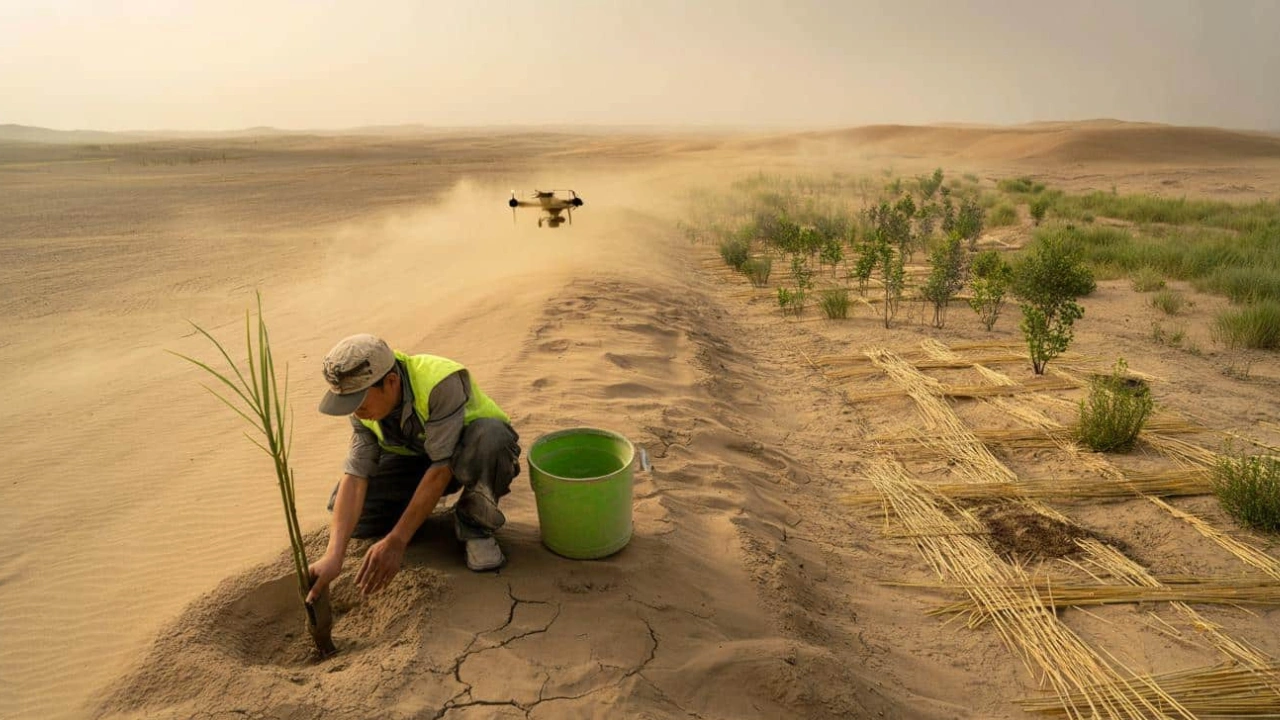
When you think about massive environmental efforts, the China Great Green Wall should be at the top of that list. This isn’t just about planting trees. It is about rewriting the relationship between people and the land. Picture vast stretches of barren land slowly turning green thanks to decades of effort, determination, and innovation. The China Great Green Wall is a response to a problem that affects millions: the desert creeping in where farms, homes, and entire towns used to be safe.
In this blog post, we will explore how China’s bold experiment to combat desertification is shaping real change on the ground. From what the Great Green Wall actually is, to how it affects daily life, economy, and even climate goals, we will look at both the wins and the setbacks. This is not a perfect solution, but it is one of the most ambitious environmental projects on Earth today.
China Great Green Wall: What It Is and Why It Matters
The China Great Green Wall is not just a strip of trees across the desert. It is a mix of forests, shrubs, grasslands, and restored land reaching across northern China. The goal is simple on paper: stop the desert from moving. But making it happen takes decades of hard work, community participation, and smart policies. What started in the 1970s as a long-term plan to block the Gobi Desert’s advance has grown into one of the largest man-made ecological systems ever attempted.
This project matters because desertification is not just an environmental issue. It affects food, water, health, and even the economy. Sandstorms used to darken the skies in cities like Beijing. Farmers were losing crops, and entire regions were turning dry and lifeless. Now, thanks to the Great Green Wall, some of those trends are reversing. It is a story of resilience, trial and error, and learning to work with nature, not just against it.
Overview Table: Key Facts About China’s Great Green Wall
| Aspect | Details |
| Project Name | China Great Green Wall / Three-North Shelterbelt Program |
| Launch Year | Late 1970s |
| Main Goal | Combat desertification across northern China |
| Area Covered | From Xinjiang (West) to Liaoning (East) |
| Total Trees Planted | Tens of billions |
| Types of Vegetation | Poplars, pines, saxaul, shrubs, native grasses |
| Water Strategies | Drip irrigation, straw grids, natural rain cycles |
| Policy Tools | Grazing bans, land restoration, eco-compensation |
| Impact on Sandstorms | Reduced frequency and severity in some regions |
| Jobs Created | Forestry workers, planters, irrigation technicians, ecotourism |
The Great Green Wall Rising from the Sand
Northern China once looked like a battlefield between sand and people. The desert kept expanding, eating up farmlands and villages. Now, satellite images show a growing patchwork of green holding back the beige waves of the Gobi Desert. The China Great Green Wall has turned fragile hope into visible change. Rows of poplars and pine trees line highways, villages are shielded by windbreaks, and reforested zones now dot the map.
But this wall is not solid. In some places, it is just rows of shrubs. In others, it is dense forests. The diversity is key. Mixed ecosystems of trees, grasses, and bushes handle drought and wind better than rows of a single species. Locals say sandstorms are less intense, and some areas even see birds and insects returning. It is not just about stopping the sand; it is about restoring life.
How China is Trying to Make the Desert Move Back
The tools used to fight desertification might not sound exciting, but they are incredibly effective. Workers dig planting holes in checkerboard patterns. Straw mats hold the sand in place until seedlings can grow. In many regions, drip irrigation helps young trees survive their first few harsh years. The government now encourages planting only during specific months when rainfall is more likely.
Water is the biggest challenge. Planting trees in dry zones means making every drop count. That is why newer efforts focus on native, drought-resistant species. These plants are better suited to survive without heavy irrigation. Also, policies are now in place to reduce grazing and let land recover naturally. This approach gives soil and grasslands a break, allowing natural growth to return without constant human input.
Visible Successes… and Clear Limitations
The China Great Green Wall has brought real, measurable results. In cities like Beijing, sandstorms are not as common or as dangerous as they were in the 1990s. In villages across Inner Mongolia, people recall times when mid-day looked like night because of the dust in the air. Now, many point to lines of trees outside their homes and say things are getting better.
However, not everything has gone as planned. Some plantations failed because of poor planning. In dry areas, planting thirsty trees made water shortages worse. In other cases, trees were planted without considering the soil type, leading to high death rates. These lessons have pushed planners to rethink how and where trees are planted. Now the focus is on smarter planting, not just planting more.
Key Practices Making the Wall Work
- Use of Native Plants: Trees and shrubs that are naturally adapted to local conditions survive longer and need less care.
- Natural Regeneration: Instead of planting everywhere, some areas are fenced off and left alone. Nature often does the job better when left to heal.
These changes are helping the project move from quantity to quality. Communities now combine economic trees like apricot and jujube with shelterbelts. This way, the land provides both protection and food. People are more likely to protect trees when they get something from them. It turns the wall from a government project into a shared effort.
Where the Great Green Wall Cracks
There are still cracks in the wall. One major issue is water use. Some early forests dried up when irrigation stopped or when groundwater levels dropped. In some cases, the once-green zones are now full of dead trunks. Experts now warn that trying to plant forests in the wrong type of land can do more harm than good.
There is also the issue of short-term goals. To meet planting targets, local officials sometimes rushed projects without planning for long-term care. Villagers talk about repeated campaigns that leave little lasting change. While the vision is long-term, the execution needs to follow that same mindset. The forest is only as strong as the care it gets after the planting day is over.
What This Giant Experiment Says About Our Future
The China Great Green Wall is more than an environmental fix. It is a glimpse into how nations can respond to slow-moving disasters like desertification. It is also a lesson in humility. Nature is not easy to control, and even the best plans can go sideways. But with adaptation, learning from mistakes, and involving local communities, real change is possible.
Other countries in Africa and Central Asia are looking to China’s model for inspiration. But the takeaway is not to copy it exactly. Every region needs its own plan, based on its own soil, water, and people. The real lesson is that if you work with nature, not against it, even deserts can be slowed.
FAQs
What is the China Great Green Wall?
It is a large-scale ecological project launched in the late 1970s to stop desertification in northern China by planting forests, shrubs, and restoring grasslands.
How many trees has China planted so far?
China reports that it has planted or encouraged the growth of tens of billions of trees across its northern regions since the project began.
Has the Great Green Wall stopped the desert completely?
No, but it has slowed its advance in many areas. Sandstorms are less frequent in several cities, and vegetation cover has improved.
What are the biggest challenges of this project?
Water scarcity, poor species selection, and maintenance of plantations are major hurdles. Some areas have seen tree deaths due to lack of water and planning.
Can other countries use this approach?
Yes, but they need to adapt it to local conditions. Using native plants and involving communities is key to long-term success.