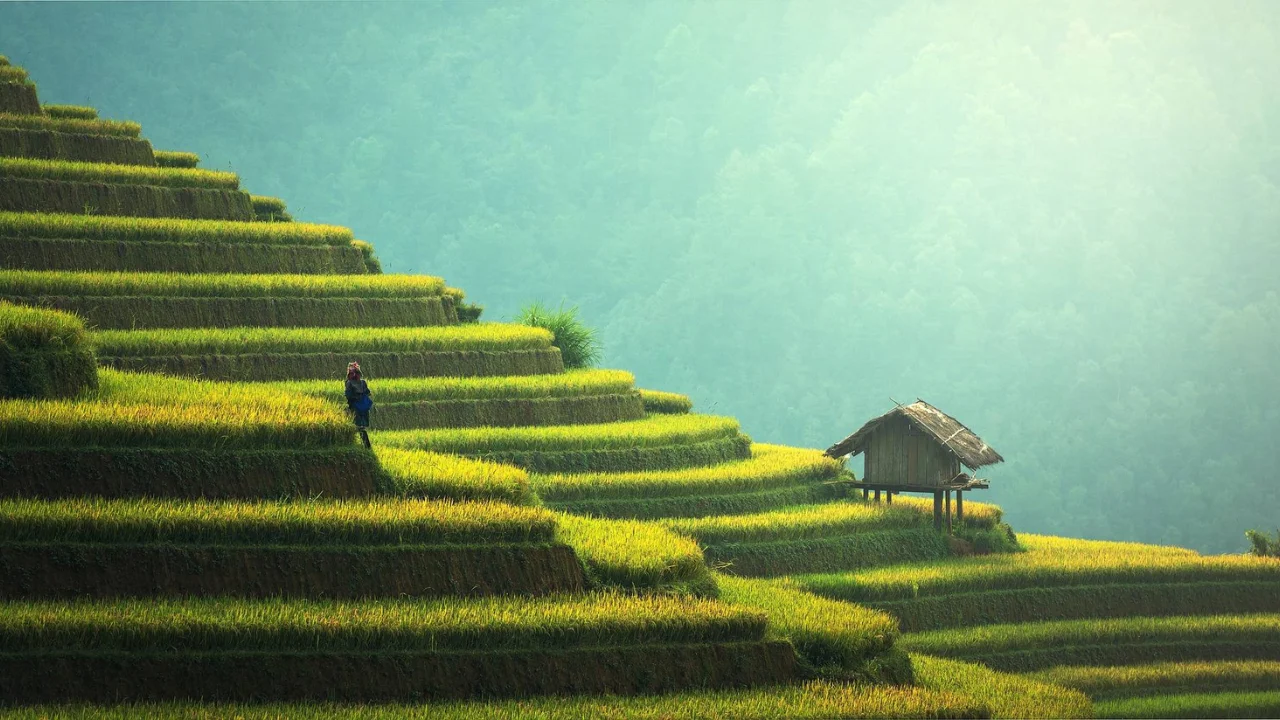
Terraced Farming: Terraced farming is one of those incredible human innovations that makes you stop and ask, “How did they even manage that?” Picture standing on a steep mountain where gravity rules, and then looking out to see perfectly carved steps stretching across the slopes, growing rice, maize, or potatoes. It is not just smart farming; it is resilience written into the land. This method has helped people survive in harsh, elevated terrains for generations, making the impossible very much possible.
Across continents and cultures, terraced farming has transformed what should be unusable land into thriving agricultural zones. It is not only about growing food on cliffs; it is about water conservation, soil retention, and building communities through shared responsibility. In this article, we are digging into how this technique works, why it matters today, and what lessons it offers for modern farming and sustainability.
Terraced Farming: A System That Works With the Mountain, Not Against It
The genius of terraced farming lies in its simplicity. Farmers do not flatten hills; they step them. By creating horizontal fields on steep slopes, they slow down water, trap nutrient-rich soil, and give crops a chance to grow where none should. These terraces act like shelves on the side of a mountain, catching rainfall, preventing erosion, and creating conditions ideal for different crops depending on elevation and soil depth.
You will find these systems from the rice terraces in the Philippines to the maize terraces in the Andes, and each one is unique. Farmers follow the natural contour of the land, stacking stones without mortar to form walls, packing earth behind them, and letting gravity do the rest. Over time, this builds not just farmland, but entire ecosystems that support biodiversity, climate resilience, and sustainable food sources in places others might see as barren.
Overview Table
| Feature | Description |
| Location | Found in mountain regions worldwide: Peru, Philippines, China, Nepal |
| Purpose | Turn steep slopes into usable, farmable land |
| Key Benefit | Prevents erosion and water runoff |
| Main Crops | Rice, maize, potatoes, grapes, and vegetables |
| Technique | Step-like fields built into mountain slopes |
| Construction Material | Stones, local soil, plant matter |
| Water Use | Gravity-fed irrigation systems and channels |
| Maintenance | Requires constant care and shared responsibility |
| Climate Impact | Reduces landslide risk and stores soil carbon |
| Cultural Value | Passed down through generations, often sacred in tradition |
From impossible cliffs to hanging gardens of food
Walk through a valley carved with terraces and it feels like the mountain has been persuaded to cooperate. Every curve of the hillside, every wall of stacked stone, speaks of effort, patience, and negotiation with the land. What was once raw rock now serves as a staircase of green, each step producing food. In many places, this practice is ancient. The Ifugao rice terraces in the Philippines, for example, are over 2,000 years old and are still maintained today.
The contrast is stunning. One side of a slope remains untouched and dry, eroding under its own weight. The other side is alive with greenery, moisture, and productivity. This transformation is not just visual—it is survival. Terraces change how rain behaves, how plants root, and how long soil stays in place. Instead of watching their crops and land wash away every rainy season, farmers have built systems that hold the mountain together.
Water management and soil conservation
One of the most impressive aspects of terraced farming is its control over two of nature’s most unpredictable forces: water and gravity. Sloped land encourages runoff, which washes away soil and nutrients. But when you terrace that slope, you slow down water’s movement. Instead of racing down, it spreads out, soaks in, and gives crops the moisture they need without drowning them.
The terrace walls trap not only water but also fine particles of fertile silt. This gradually builds a deeper, richer soil base. Over time, the land becomes more productive, more resilient to storms, and less likely to erode. Some studies from China’s Dragon’s Backbone terraces show that erosion is reduced by over 50 percent compared to non-terraced slopes. That is a major win for both farmers and the environment.
How terracing actually works, step by step
Watch a terrace being built and you will see generations of skill at work. It starts with reading the land: where the water flows, where the rock lies, how the slope curves. Then comes the first ledge, cut horizontally into the mountain. Stone by stone, a wall is built at the edge, and soil is layered in behind it.
Each terrace is just wide enough for planting and walking. Channels are dug to guide water from one level to the next. Farmers use mud, wood, or stones to control the flow—flooding one terrace while letting another rest. The top terrace receives the first water, and the bottom one collects the most nutrients. In wet systems, like those for rice, these terraces become mini ponds filled with aquatic life that help fertilize the crops.
Built to last: maintenance and community
Terraces are not self-sustaining. They require regular upkeep—replacing stones, clearing channels, and repairing cracks. If one terrace fails, it can damage everything below it. That is why terraced systems often rely on community cooperation. Neighbors have to work together to share water, manage paths, and protect the shared land.
In many places, younger generations are leaving farming behind, and that puts these ancient systems at risk. Without regular maintenance, even well-built terraces can fade away. That is why revival projects now focus not only on rebuilding stone walls but also on rebuilding community ties. A terrace is not just a field—it is a shared memory, a legacy that needs people to keep it alive.
Terraced farming techniques in action
- Staggered terrace design: Narrower terraces are built higher up the slope, where space is tighter and runoff is stronger. Wider terraces are created lower down, where soil and water naturally accumulate.
- Seasonal water flow timing: Farmers follow a strict rhythm—planting upper levels first so water naturally flows down to the lower terraces as the season progresses. This maximizes resource use and prevents overwatering.
What these mountain staircases say about our future
Terraces are not just about history. In a world facing water shortages, soil degradation, and climate shifts, terraced farming offers practical solutions. These systems trap water, store carbon in soil, and support diverse crops in limited space. They are being studied by agroecologists and even urban planners looking to green city edges and stabilize steep ground.
Some terraces have fallen to neglect or tourism pressures, while others are struggling against harsher climate conditions. But the principles remain solid: work with the land’s shape, stretch what space you have, and turn obstacles into opportunity. This is not about going back to the past. It is about learning from it to shape a smarter, more resilient future.
FAQs
How does terraced farming help reduce erosion?
By cutting horizontal steps into slopes, terraces slow down water flow and keep soil from washing away, protecting both land and crops.
Is terraced farming still used today?
Yes, many mountain communities across Asia, South America, and Africa still rely on it, and new interest is growing due to its environmental benefits.
What crops grow best on terraced farms?
Crops like rice, maize, potatoes, and grapes thrive on terraces, especially when matched to the microclimates of each level.
Can terraced farming be used in urban areas?
Yes, the concept is used in urban gardens and green infrastructure to manage water runoff and grow food on steep terrain.
Why is community important in terrace maintenance?
Water and walls often cross multiple properties, so regular communication and shared responsibility are key to keeping the system running smoothly.