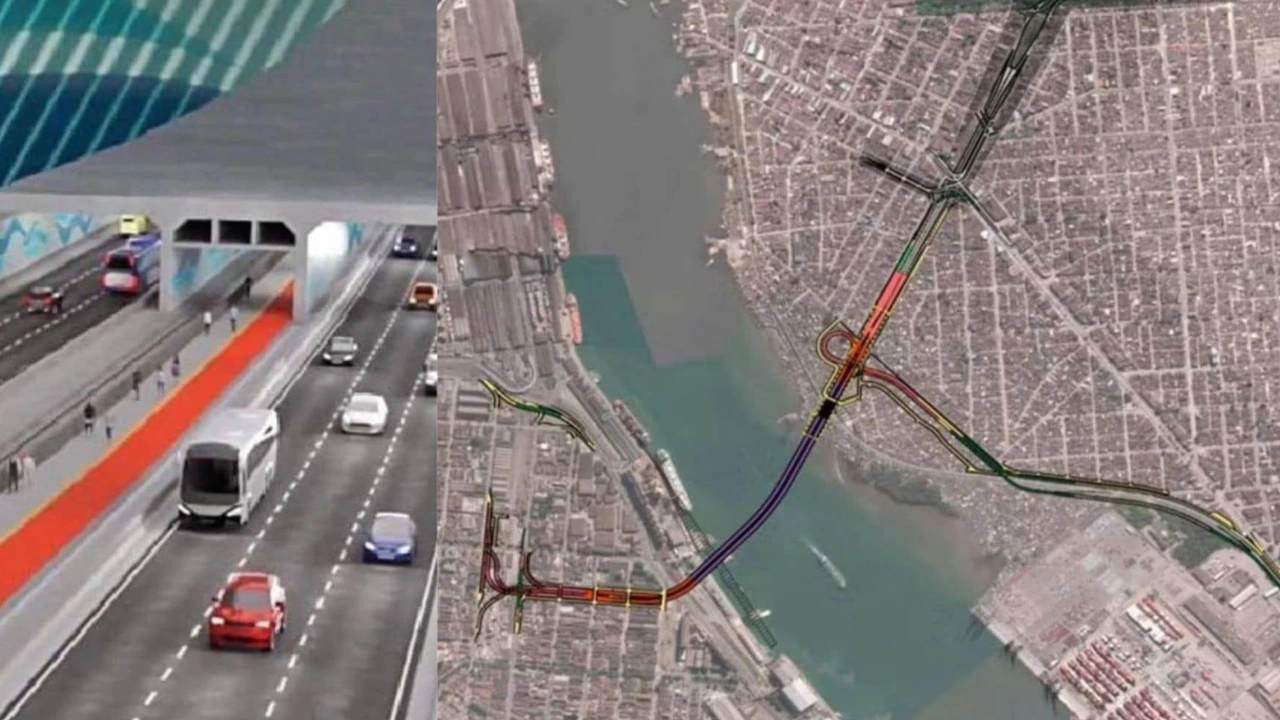
The Brazil immersed tunnel project is something the country has never seen before. Imagine shaving off more than an hour from your daily commute just by driving under the water instead of waiting in long lines for a ferry. That is exactly what this project promises to deliver. For residents of Santos and Guarujá, this is more than just a tunnel. It is a much-needed solution to the frustrating daily delays they have been dealing with for years.
This article explores the Brazil immersed tunnel project in depth. From its structure and investment to how it is expected to improve travel and the quality of life, we will cover all the important details. With the goal of connecting two major cities through an underwater route, this project is set to change urban mobility in Latin America. Let us take a closer look at what makes this project so special.
Brazil immersed tunnel project: A turning point in urban transport
The Brazil immersed tunnel project is a milestone in Latin American infrastructure. Unlike traditional tunnels that are dug deep underground, this one will be constructed using prefabricated sections that are sunk into a trench on the seabed. Once completed, the tunnel will stretch 1.5 kilometers with 870 meters running underwater. This project is the first of its kind in the region and a clear step forward in how cities can be better connected.
It is not just about cars. The tunnel will include three lanes in each direction, one of which is dedicated to a light rail transit system. It will also have safe, separate access for pedestrians and cyclists. This kind of planning ensures that everyone can benefit, whether they travel by car, foot, bike, or train. With a price tag of R$ 6.8 billion, it is a big investment, but one that is expected to pay off through improved logistics, reduced emissions, and better daily life for thousands of commuters.
Project Overview Table
| Feature | Details |
| Cities Connected | Santos and Guarujá |
| Total Tunnel Length | 1.5 kilometers |
| Submerged Length | 870 meters |
| Project Cost | R$ 6.8 billion |
| Project Type | Public-private partnership |
| Construction Company | Mota-Engil (Portugal) |
| Number of Lanes (Each Direction) | 3 (including light rail lane) |
| Pedestrian and Cyclist Access | Yes |
| Expected Completion Year | 2031 |
| Current Ferry Travel Time | Up to 1 hour with waiting |
Cities Connected: Santos and Guarujá
Santos and Guarujá are two important coastal cities in the state of São Paulo. While they are close in distance, crossing between them is a daily challenge. At the moment, residents depend on a ferry system that often leads to long lines and frustrating wait times. During peak hours or weekends, it is not unusual for a simple crossing to take over an hour.
The Brazil immersed tunnel project will finally offer a permanent and reliable solution. By replacing ferries with a direct road and rail link, travel between the two cities will become faster, easier, and more predictable. This will not only benefit commuters but also businesses that rely on moving goods between the cities and the nearby Port of Santos.
Total Length: 1.5 kilometers
The tunnel will be 1.5 kilometers long, which is just under one mile. That distance might not sound like much, but the impact it will have on daily travel is huge. The underwater section alone will cover 870 meters, creating a smooth and direct path between the two shores.
This length was carefully planned to make sure the tunnel serves both cities without affecting existing infrastructure too much. Building under the water avoids disturbing the busy port area while still offering a faster alternative to the current ferry route. The result is a practical and innovative way to connect two growing urban centers.
Submerged Length: 870 meters
The submerged portion of the tunnel is the most complex and impressive part of the project. Measuring 870 meters, this part of the tunnel will be built using immersed tube technology. Prefabricated sections will be floated out, sunk, and joined together underwater.
This method has been used in places like Denmark and China, but never before in Latin America. It is safe, durable, and ideal for locations where surface disruption needs to be minimized. With water above and heavy traffic passing below, safety and strength are top priorities in this part of the design.
Investment: R$ 6.8 billion
Building such a large and advanced project comes at a high cost. The estimated investment is R$ 6.8 billion, a figure that reflects the scale and complexity of the job. The money will come through a public-private partnership that includes the federal government, São Paulo state, and a private concessionaire.
While the price tag is big, the long-term benefits make it a smart investment. By reducing travel time, improving safety, and supporting multiple modes of transportation, the tunnel will create value that goes far beyond its construction cost. It is not just about saving time. It is about boosting the economy, cutting emissions, and building for the future.
Features: Multi-modal access
One of the standout aspects of the Brazil immersed tunnel project is its multi-modal design. The tunnel will have three lanes in each direction. One of these lanes will be reserved for a light rail system, making public transportation faster and more reliable. This feature will help reduce car traffic and pollution over time.
There will also be dedicated paths for cyclists and pedestrians. This kind of planning is often missing in big infrastructure projects, but here it shows a commitment to inclusivity and sustainability. Whether you are walking, biking, or taking the train, this tunnel will offer a safer and faster way to travel.
Travel Time Reduction
Today, crossing from Santos to Guarujá by ferry can take anywhere from 30 minutes to over an hour, depending on traffic and waiting times. That daily delay adds up quickly, especially for people who make the trip every day for work or school.
With the tunnel, that time will be cut down to just a few minutes. No waiting in line, no delays from bad weather or mechanical issues. Just a quick, smooth drive or ride straight to the other side. This kind of improvement will change how people plan their days and improve quality of life in a big way.
Status: Public-private partnership
The Brazil immersed tunnel project is being delivered through a public-private partnership, or PPP. This model brings together public funding and private expertise, making it easier to handle large-scale projects. The Portuguese company Mota-Engil has been chosen to lead the construction.
By combining resources, the PPP approach helps manage risks, improve project efficiency, and make sure the tunnel meets high standards. This partnership reflects a growing trend in global infrastructure where collaboration leads to better, faster, and more reliable results.
Operations are expected to begin by 2031
Although still in its early stages, the goal is to have the tunnel fully operational by 2031. Over the next few years, teams will focus on planning, environmental impact studies, and construction work. Given the size and complexity of the project, this timeline is ambitious but realistic.
Once open, the tunnel will become a landmark in Brazil’s transport network. It will not only improve the daily lives of those who use it but also stand as a symbol of what modern infrastructure can achieve when well planned and well executed.
Frequently Asked Questions (FAQs)
1. What is the Brazil immersed tunnel project?
It is a new underwater tunnel being built to connect Santos and Guarujá, replacing the current ferry system and reducing travel times.
2. How long will the tunnel be?
The tunnel will be 1.5 kilometers long, with 870 meters running underwater.
3. Who is funding and building the tunnel?
The project is a public-private partnership involving the federal and state governments and the Portuguese construction firm Mota-Engil.
4. When will the tunnel be completed?
The tunnel is expected to be completed and operational by the year 2031.
5. Will pedestrians and cyclists be able to use the tunnel?
Yes, the design includes safe, separate paths for both pedestrians and cyclists.